


Chlorodifluoromethane
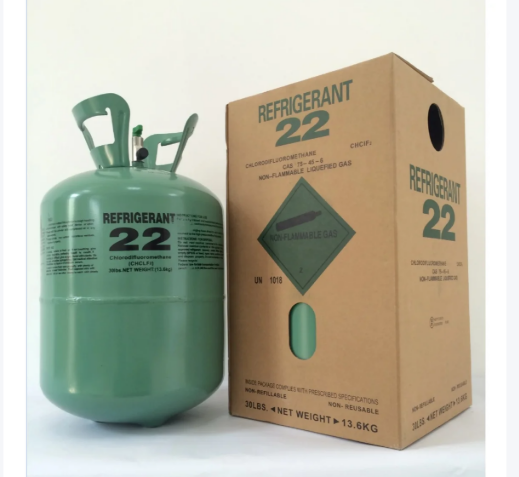
| Physicochemical properties | Color and odor state: colorless gas, with a slight sweetening smell | Toxicity: Low toxicity | |
| Flammability: non-combustible, but toxic gas is produced when decomposed at high temperature | Density: 1.21 | ||
| Volatile: Gas, highly volatile | Corrosive: Corrosive to magnesium and its alloys | ||
| Boiling point: -40.8°C | Stability: Stability | ||
| Melting point: -157°C | Acidity-alkaline: neutral | ||
| Moisture absorption: does not absorb moisture | Spontaneous ignition point: 632°C | ||
| Deliquescence: No deliquescence | Solubility: Slightly soluble in water, easily soluble in organic solvents such as ether, chloroform, acetone, etc | ||
| Various numbers | CAS: 75-45-6 | HS: 2903710000 | EINECS:200-871-9 |
| Usage : | It is mainly used as a refrigerant (air conditioning and refrigeration equipment), and is also used as a raw material for the production of tetrafluoroethylene (raw material for the preparation of polytetrafluoroethylene), aerosol spray and fire extinguishing agent. | ||
| Hazard category | Class 2.2 Non-combustible gases (also classified as pressurized gases, harmful to the ozone layer). | ||
| Fire-fighting measures | This product is non-flammable, but it is easy to decompose when heated. If there is a fire around it, cut off the air source, spray water to cool the container, and move the container from the fire to an open place. According to the fire situation, dry powder and carbon dioxide are used to extinguish the fire. | ||
| Emergency treatment | Inhalation: Quickly leave the scene to fresh air to keep the airway open. If breathing is difficult, give oxygen. If breathing stops, give artificial respiration and seek medical attention immediately. Skin contact: Contact with liquefied gases can cause frostbite. The affected area should be rinsed immediately with plenty of warm water and seek medical attention. Take off contaminated clothes. Eye contact: Lift the eyelids immediately and rinse thoroughly with plenty of running water or saline for at least 15 minutes, and seek medical attention if unwell. | ||
| Packaging, storage, transportation | Packaging: This product is liquefied gas, which must be packaged with a special pressure vessel. Non-refill cylinders: Common sizes are 13.6kg (30lb) and 22.7kg (50lb). Refill cylinders: Commonly used formats include 400L, 800L, 926L, and 1000L cylinders, as well as ISO-TANK tank containers. Storage: Store in a cool and ventilated special warehouse for non-combustible gas, away from fire and heat sources, and the storage temperature should not exceed 30°C. It should be stored separately from oxidants and flammables. Transportation: In accordance with the regulations on the transportation of dangerous goods, the cylinders should be equipped with safety helmets during transportation, and the cylinders should be loaded and unloaded lightly to prevent the cylinders and accessories from being damaged. It is strictly forbidden to mix and transport with oxidants, halogens, etc. |
||
Next product: Hexafluoropropylene